
Welcome to the Earth Innovation blog! 🌱 If you are tired of using harsh chemicals, messy traps, and toxic sprays to keep your home or business pest-free, you are in the right place.
At Earth Innovation (www.earthinnovation.in), we believe in smart, eco-friendly solutions. One of the most fascinating advancements in pest control is the use of Sonic and Ultrasonic Frequencies. But how exactly does a simple sound wave drive away a stubborn rat or a swarm of mosquitoes? And more importantly, which frequency targets which pest?
Let’s break down the science of sound and explore the ultimate frequency step-by-step!
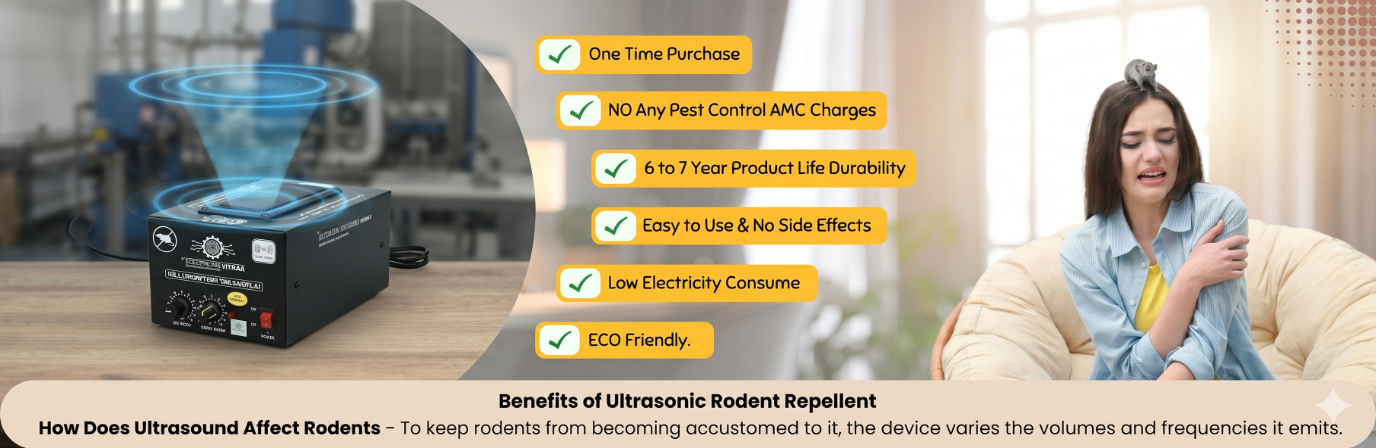
🧠 How Frequency Pest Repellents Work
Before we dive into the numbers, here is the basic science: Pests have incredibly sensitive hearing, often capable of detecting sounds far beyond human capabilities (which maxes out around 20 kHz).
Pest repellers emit targeted sound waves that act like a blaring rock concert to insects and rodents. Depending on the pitch, these sounds can:
-
Cause Auditory Stress: The intense sound pressure disrupts their nervous system.
-
Mimic Predators: Some high frequencies mimic the echolocation of bats, scaring away moths and mosquitoes.
-
Disrupt Communication: It masks their mating calls and danger signals, making the area unsafe for them to nest.
Now, let’s tune into the frequencies! 🎛️
🔊 1. The Heavy Bass: 20 Hz to 1 kHz (Low Frequency / Infrasonic)
🎯 Target Pests: Moles, Gophers, Snakes, and Voles.
-
How it Works: At this extremely low level, sound acts more like a physical vibration. Earth Innovation devices utilizing this range send rhythmic seismic pulses through the ground. Because burrowing pests rely on soil vibrations to detect danger, these constant pulses severely disorient them, forcing them to abandon your lawn or garden.
-
[Insert Attractive Image: A beautiful green lawn with a subtle vibration graphic underground] 🌿
🦅 2. The Audible Alarm: 1 kHz to 20 kHz (Sonic)
🎯 Target Pests: Birds (Pigeons, Crows, Seagulls), Raccoons, Deer, and Stray Animals.
-
How it Works: This range is audible to human ears. It is typically used outdoors in agricultural or industrial settings. By broadcasting predator calls or distress signals within this range, it triggers a natural “flight” response in birds and larger mammals.
-
[Insert Attractive Image: An agricultural field or warehouse with a sonic wave graphic] 🏢
🐁 3. The Rodent Zone: 20 kHz to 40 kHz (Low Ultrasonic)
🎯 Target Pests: Mice, Rats, Squirrels, and Bats.
-
How it Works: Welcome to the ultrasonic zone (silent to humans!). Rodents communicate and listen for danger precisely within this frequency band. Bombarding a room with 20-40 kHz waves creates severe auditory fatigue for mice and rats. It makes it impossible for them to sleep, forage, or communicate, driving them out of your walls and kitchens.
-
[Insert Attractive Image: A sleek ultrasonic device plugged into a wall outlet, showing waves deterring a mouse] ⚡
🕷️ 4. The Crawler Clearance: 40 kHz to 65 kHz (Mid Ultrasonic)
🎯 Target Pests: Cockroaches, Spiders, Ants, Fleas, and Ticks.
-
How it Works: Crawling insects process sound and air pressure differently than mammals. Frequencies in this mid-ultrasonic range interact with the tiny hairs (trichobothria) on their bodies, causing intense physical irritation and disorientation. It disrupts their feeding and breeding cycles.
-
[Insert Attractive Image: Emojis or icons of spiders and roaches turning away from a sound wave] 🚫
🦟 5. The Flying Insect Shield: 60 kHz to 100 kHz (High Ultrasonic)
🎯 Target Pests: Mosquitoes, Flies, Moths, and Wasps.
-
How it Works: Many flying insects, particularly mosquitoes and moths, have evolved to avoid the ultrasonic echolocation sounds of their natural predators—bats. By emitting frequencies in this range, repellers trick these pests into thinking a predator is nearby, causing them to flee the area immediately.
-
[Insert Attractive Image: A mosquito flying away from a glowing sound wave graphic] 🦇
🪲 6. The Micro-Pest Barrier: 100 kHz to 125 kHz (Advanced Ultrasonic)
🎯 Target Pests: Bed Bugs, Dust Mites, and Silverfish.
-
How it Works: These are highly resilient, deeply embedded pests. Frequencies over 100 kHz are intensely sharp and highly localized. While sound alone won’t instantly kill them, this advanced high-frequency range creates a hostile breeding environment, slowing down their reproduction rates and driving them away from their preferred nesting spots in your mattress or carpets.
-
[Insert Attractive Image: A clean, serene bedroom setup] 🛏️
🔬 7. The Ultimate Frequency: 125 kHz to 150 kHz (Ultra-High Frequency)
🎯 Target Pests: Micro-pests, severe infestations, and specific agricultural mites.
-
How it Works: This is the absolute upper limit of commercial ultrasonic tech. The sound waves here are incredibly short and fast. They create a chaotic acoustic environment on a microscopic level. It is used as an extreme deterrent to ensure that even the most stubborn, highly-adapted micro-insects cannot find peace in your space.
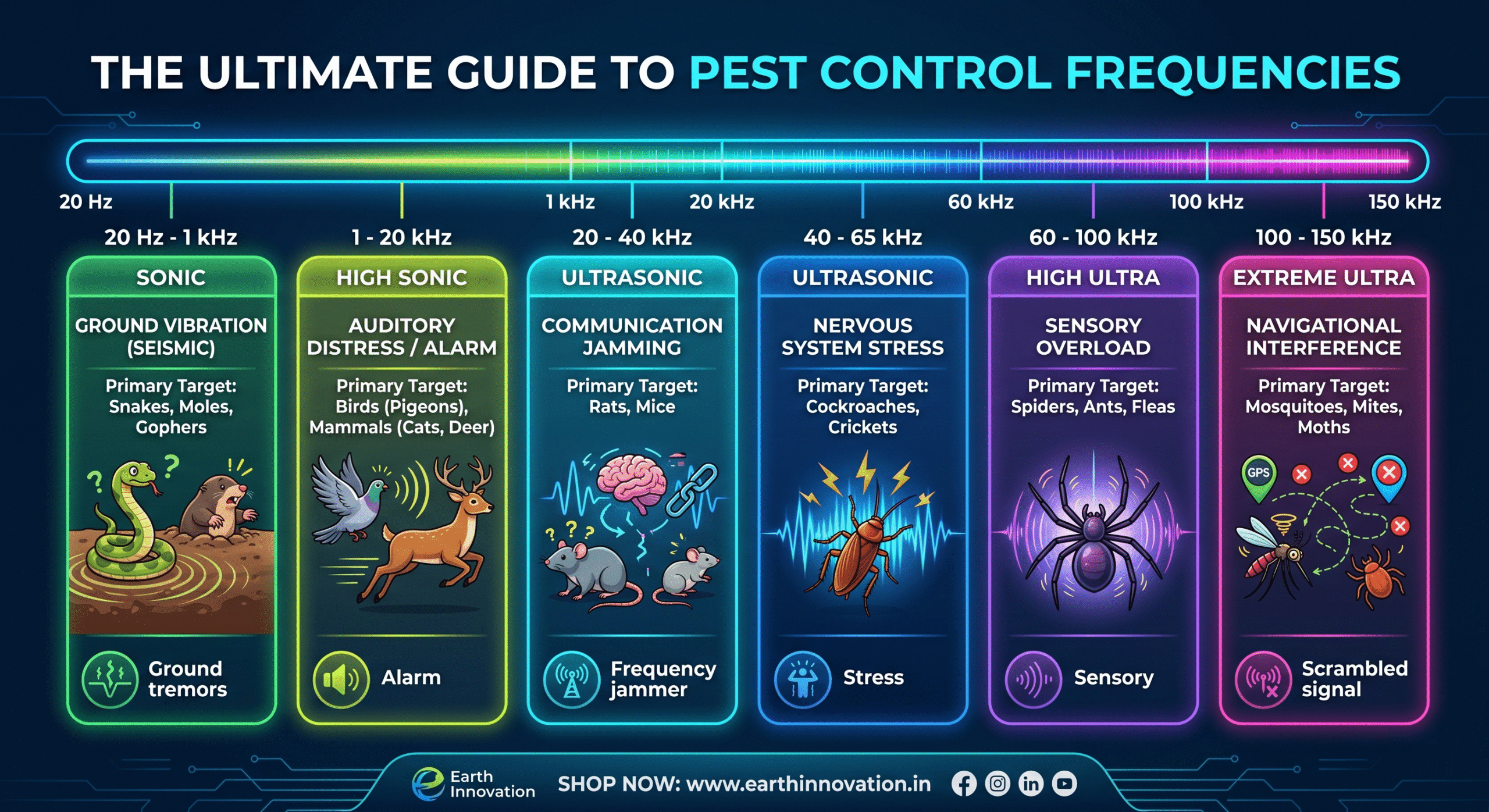
📊 Earth Innovation Frequency Quick-Reference Table
Save this chart to know exactly what frequency you need for your pest problem!
| Frequency Range | Classification | Primary Target Pests | How it Works |
| 20 Hz – 1 kHz | Low / Infrasonic | Moles, Gophers, Snakes | Seismic vibrations disorient burrowing pests. |
| 1 kHz – 20 kHz | Sonic (Audible) | Birds, Raccoons, Deer | Broadcasts distress or predator calls. |
| 20 kHz – 40 kHz | Low Ultrasonic | Mice, Rats, Squirrels | Causes severe auditory stress in rodents. |
| 40 kHz – 65 kHz | Mid Ultrasonic | Roaches, Spiders, Ants | Irritates sensory hairs on crawling insects. |
| 60 kHz – 100 kHz | High Ultrasonic | Mosquitoes, Flies | Mimics bat echolocation to scare flying pests. |
| 100 kHz – 125 kHz | Advanced Ultrasonic | Bed Bugs, Dust Mites | Disrupts breeding of deeply embedded pests. |
| 125 kHz – 150 kHz | Ultra-High | Micro-pests, Mites | Creates a chaotic, hostile micro-environment. |
🌍 Quick Reference: Upgrade to Eco-Friendly Pest Control Frequencies with Earth Innovation!
Ready to ditch the toxic sprays and protect your home the smart way? At Earth Innovation, we provide cutting-edge, cruelty-free pest control solutions tailored to your needs.
🛒 Shop Our Advanced Pest Repellers Today!
- E-commerce store: www.amazon.in
- Main Website: www.earthinnovation.in
- Website : www.rodentrepellent.in
Eco-Friendly Pest Control: Safe Sound Frequencies That Drive Pests Away
📱 Stay Connected with the Earth Innovation Community!
Join our growing community and stay updated on the latest innovations in smart pest control!
Follow us for daily tips, exclusive discounts, and more eco-friendly life hacks:
-
Facebook: https://www.facebook.com/EARTH195/
-
Instagram: https://www.instagram.com/earth_innovation/
-
Twitter/X: https://x.com/earth_innovatio
-
LinkedIn: https://www.linkedin.com/in/piyush-ghoghari-368051229/
Say goodbye to pests and hello to peace of mind with Earth Innovation! ✨🏡
Note: Ultrasonic waves cannot travel through solid walls, furniture, or heavy curtains. To maximize coverage in multiple rooms, you will need to place a device in each specific area.